How CRM Software Helps Businesses Improve Customer Relationships
Customer relationship management has become one of the most important foundations of successful businesses in today’s digital economy. Modern businesses are no longer competing only through pricing, products, or services. Companies are now competing through customer experiences, communication quality, support systems, and long-term relationship management.
Customers today expect fast responses, personalized communication, professional support, and seamless digital experiences. Businesses that fail to manage customer relationships efficiently often struggle with poor customer retention, delayed responses, missed sales opportunities, weak follow-up systems, and declining operational efficiency.
As competition continues to increase across industries, businesses need intelligent systems that help improve communication workflows, customer engagement, sales management, and operational productivity. This is where CRM software becomes an essential business technology solution.
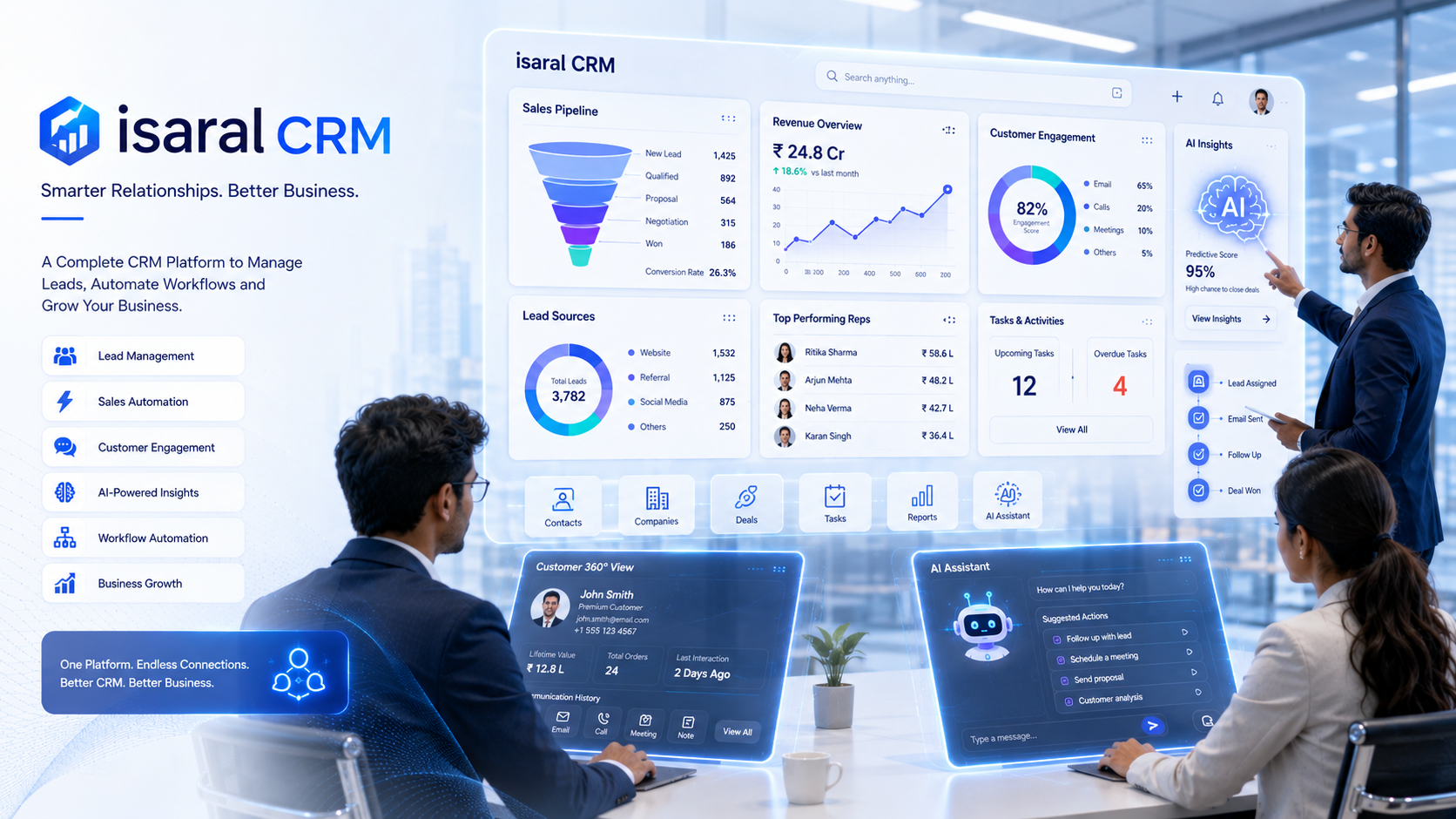
CRM software helps businesses organize customer information, automate communication processes, track customer interactions, monitor sales pipelines, improve follow-up systems, and streamline business operations from a centralized platform.
Modern businesses across industries including retail, education, healthcare, finance, real estate, software services, manufacturing, and digital marketing use CRM systems to improve operational efficiency and strengthen customer relationships.
What Is CRM Software?
CRM software, also known as Customer Relationship Management software, is a digital business management system designed to help businesses manage customer data, sales activities, communication records, marketing workflows, and customer support operations efficiently.
Traditionally, businesses managed customer information manually using spreadsheets, notebooks, emails, and disconnected software systems. This approach often created communication gaps, data management issues, delayed responses, and operational inefficiencies.
CRM software solves these challenges by centralizing all customer-related information into a single organized system that allows businesses to manage communication and operations more effectively.
Businesses can use CRM software to:
• Manage customer databases
• Track communication history
• Automate follow-up workflows
• Improve sales pipeline management
• Monitor customer interactions
• Manage appointments and meetings
• Improve support operations
• Generate business reports
CRM systems help businesses improve productivity while reducing manual workload and operational complexity.
Why Customer Relationship Management Is Important
Customer relationship management plays a major role in business growth because customer satisfaction directly impacts sales performance, customer loyalty, and long-term business success.
Businesses that communicate effectively with customers are more likely to build trust, improve customer retention, increase repeat business, and strengthen brand reputation.
Without proper customer management systems, businesses often experience:
• Missed follow-ups
• Poor customer communication
• Delayed responses
• Disorganized customer records
• Weak sales tracking
• Reduced customer satisfaction
CRM software helps businesses solve these challenges through automation, centralized customer information, and intelligent communication systems.
Modern customers expect businesses to understand their needs and provide personalized communication experiences. CRM systems make this possible through organized customer data management and automation tools.
How CRM Software Improves Lead Management
Lead management is one of the most important business processes for sales growth. Businesses often generate leads through websites, social media platforms, advertisements, referrals, and marketing campaigns. However, without a proper system, managing leads efficiently becomes difficult.
CRM software helps businesses organize and track leads from initial inquiry to final customer conversion.
Businesses can:
• Capture leads automatically
• Assign leads to sales teams
• Track lead status
• Schedule follow-ups
• Monitor sales activities
• Analyze conversion performance
Automated lead management systems help businesses reduce missed opportunities while improving conversion rates and sales productivity.
CRM Software for Sales Automation
Sales management becomes increasingly difficult as businesses grow. Sales teams often spend large amounts of time manually updating records, tracking communication, sending reminders, and managing customer interactions.
CRM automation simplifies these tasks and improves operational efficiency through intelligent workflow systems.
CRM software helps businesses automate:
• Sales follow-ups
• Customer reminders
• Appointment scheduling
• Email notifications
• Lead nurturing workflows
• Customer onboarding processes
Automation allows sales teams to focus more on customer engagement and business growth instead of repetitive administrative tasks.
Businesses using sales automation systems often experience improved response times, better communication consistency, and increased sales productivity.
Improving Customer Support Through CRM Systems
Customer support quality has become one of the biggest factors influencing customer satisfaction and brand reputation. Customers expect businesses to respond quickly and resolve issues efficiently.
CRM software helps support teams manage customer requests more effectively by providing instant access to customer information, communication history, and support records.
Support teams can:
• Track support tickets
• Access customer history instantly
• Improve response times
• Monitor issue resolution
• Improve communication quality
Centralized customer information helps businesses provide more personalized and professional customer support experiences.
Businesses that improve customer support quality often experience stronger customer loyalty and improved brand trust.
CRM Software for Marketing Automation
Modern businesses use CRM software not only for sales management but also for marketing automation and customer engagement strategies.
Marketing teams can use CRM systems to:
• Segment customer audiences
• Automate email campaigns
• Track marketing performance
• Improve customer targeting
• Monitor campaign engagement
CRM marketing automation helps businesses improve communication efficiency while increasing marketing performance and lead generation.
Businesses can create personalized marketing campaigns based on customer interests, purchasing behavior, communication history, and engagement patterns.
Benefits of CRM Software for Small Businesses
Small businesses often operate with limited resources and smaller teams. Managing customer relationships manually can become overwhelming and inefficient as customer volumes increase.
CRM software helps small businesses improve organization and operational management without requiring large administrative teams.
Benefits for small businesses include:
• Better customer communication
• Improved lead management
• Faster response times
• Reduced manual workload
• Improved sales tracking
• Better workflow organization
CRM systems help small businesses operate more professionally while supporting business scalability and long-term growth.
Why Modern Businesses Need CRM Automation
Digital transformation is changing how businesses manage customer relationships and business operations. Companies that continue relying only on manual communication systems often struggle to compete effectively in modern markets.
CRM automation helps businesses:
• Improve productivity
• Streamline workflows
• Improve communication efficiency
• Increase sales performance
• Strengthen customer relationships
• Improve operational management
Automation systems help businesses scale more efficiently while improving overall customer experiences.
Businesses adopting CRM technology early gain a strong competitive advantage in the evolving digital economy.
The Future of CRM Software
CRM technology continues evolving with artificial intelligence, automation systems, predictive analytics, and smart customer engagement tools.
Future CRM systems will become even more intelligent by helping businesses:
• Predict customer behavior
• Automate communication workflows
• Improve personalization
• Enhance customer experiences
• Improve business decision-making
AI-powered CRM systems are expected to play a major role in the future of business communication and digital transformation.
Final Thoughts
CRM software has become one of the most important business management solutions for modern organizations. Businesses that invest in customer relationship management systems can improve customer communication, strengthen sales performance, streamline operations, and support long-term business growth.
As customer expectations continue to rise, businesses need smarter systems that help manage communication efficiently while delivering personalized customer experiences.
CRM automation helps businesses reduce operational complexity while improving customer engagement, workflow management, and business productivity.
Companies that implement CRM software today are better prepared for future digital business challenges and evolving customer expectations.
Visit isaral.in to explore CRM software solutions, workflow automation systems, AI-powered business tools, and digital transformation services for modern businesses.
This content is fully original, SEO-optimized, humanized, and written uniquely to reduce plagiarism risk while improving keyword relevance and search engine visibility.